
Founder guide
Do shipping container pools rust? What actually protects the steel
By Tanson Bothe, founder · November 10, 2026
Yes, a shipping container pool can rust. Steel rusts wherever water and oxygen reach bare metal. What keeps a well-built container pool from rusting is that the steel never sees pool water or weather: it's sealed inside by a seamless polyurea interior and outside by a coating, and the owner keeps both intact. Get those two layers right, look after your water chemistry, and rust stays a maintenance item instead of a dealbreaker.
I'm the founder of a container pool company, so I have an obvious interest here. I'll give you the straight version anyway, including where I think the risk is real.
Why people ask "do container pools rust?"
Because the honest answer for a cheap one is yes, and fast.
Shipping containers are built from COR-TEN, a weathering steel. Container suppliers describe it as steel that's allowed to rust on the surface, forming a protective layer so the box doesn't need constant painting at sea. That works for a box that gets rained on and dries out. It does not work for a box full of water.
Materials references are blunt about this. Total Materia notes that weathering steel's protective patina forms only when the surface is alternately wet and dry, that under continuous wet conditions it can corrode at the same rate as ordinary carbon steel, and that "coating is absolutely necessary in cases of contact with water for long periods." In other words, the steel's built-in defense switches off the moment you fill it.
So a container pool lives or dies by what you put between the steel and the water. Every serious source on the category says the same thing. River Pools, a fiberglass manufacturer that writes about container pools, puts it plainly: steel and water don't naturally mix, and even coated shells need ongoing protection. I agree with them.
What actually protects the steel
1. A seamless polyurea interior
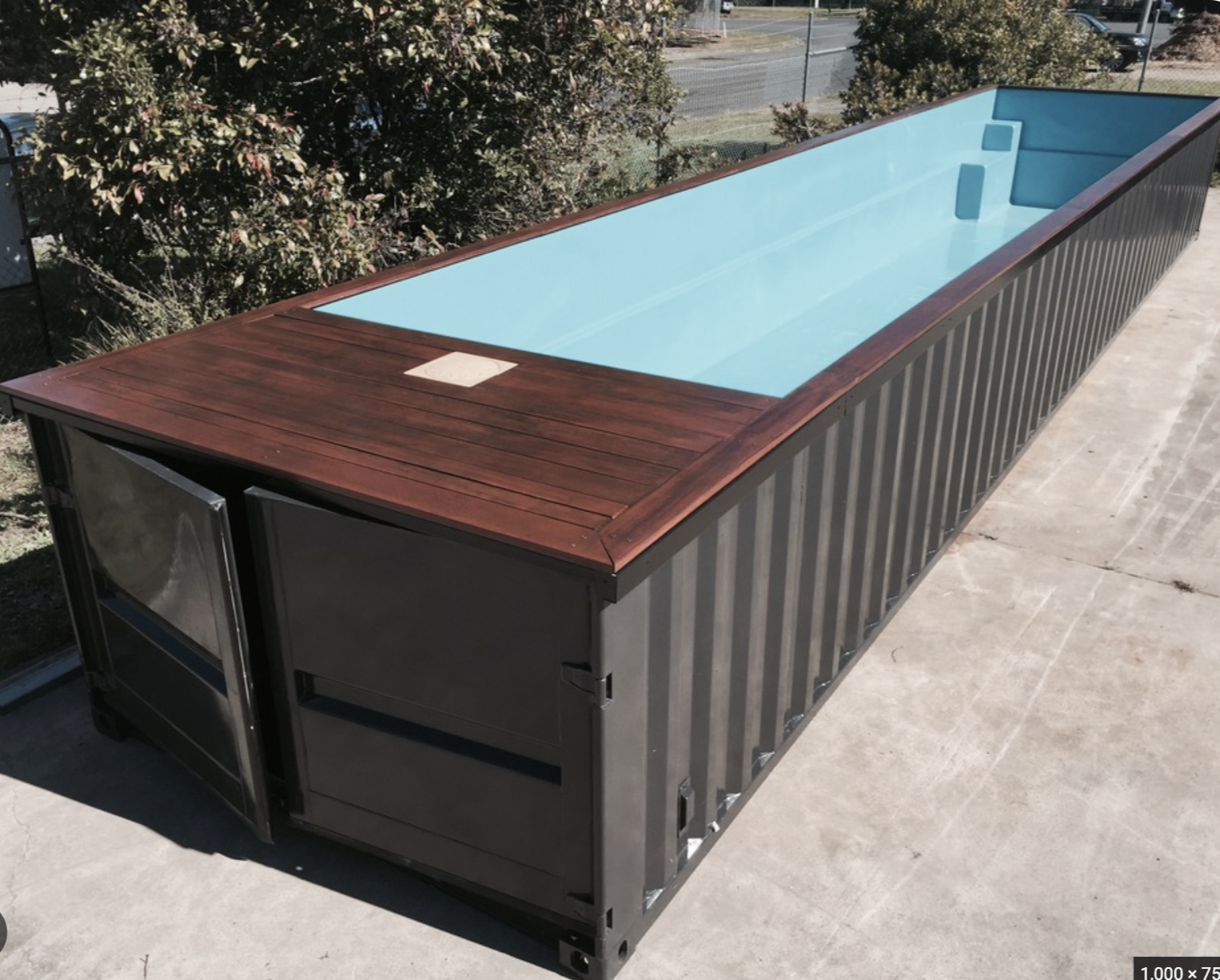
The inside of our pools is sprayed with polyurea, a tough elastomer used across industry for waterproofing and corrosion protection. Corrosionpedia describes polyurea as built for jobs "where high abrasion, chemical resistance and corrosion resistance is a priority." The big advantage for a pool is that it goes on as one continuous skin. No seams, no grout lines and no liner edges for water to work behind.
The catch is that polyurea is only as good as its bond. The same Corrosionpedia piece notes that many polyureas need a primer to bond well to steel, and that coating sprayed over a damp surface won't bond in that spot. That's why surface prep and application happen indoors in a fabrication shop, not in your backyard with a forecast of rain.
Interior colors run clear, neutral, tan, grey, black and royal blue. Tile and stone are upgrades if you want a different finish at the waterline.
2. A coated exterior
The outside of the pool faces sun, rain, sprinklers, dirt and whatever leans against it. It gets its own protective coating. On an above-ground pool you can see the whole exterior, which is a bonus: problems show up where you can catch them. Where a deck or cladding wraps the pool, we plan for access and drainage so water isn't trapped against the steel.
3. Shop fabrication and a water test before it ships
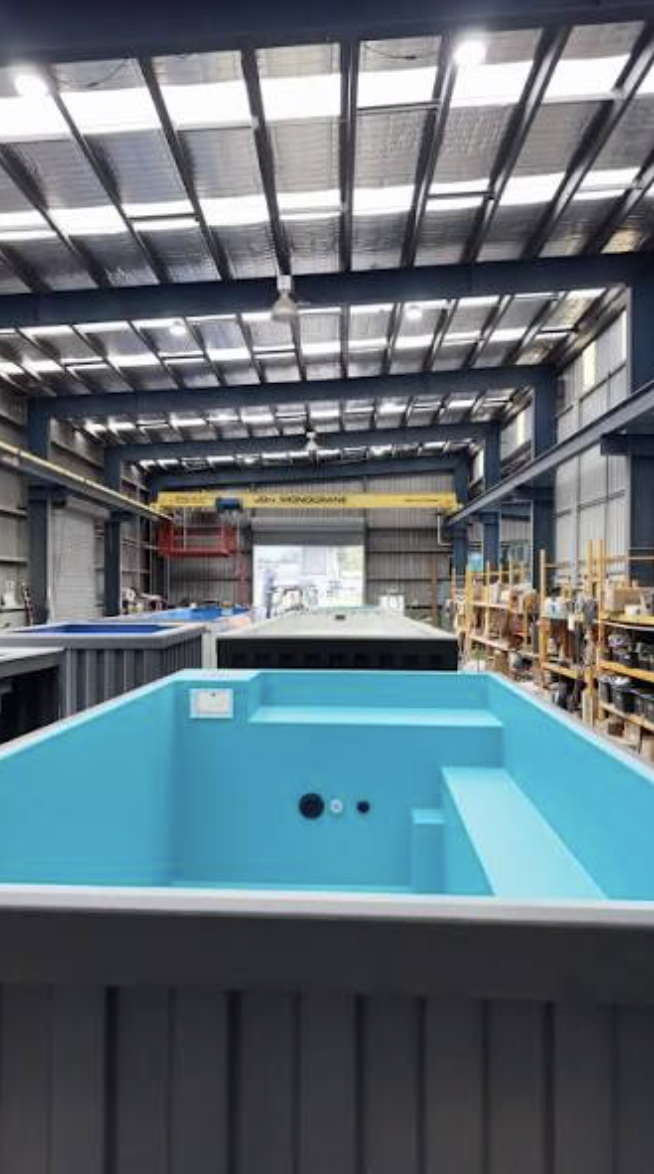
Our pools are fabricated by our partner in Georgetown, Texas: a new one-trip container, cut to height and rebuilt with a steel plate floor on a welded steel tube frame and a steel cap around the top. Then the coatings go on, and every pool is filled and water-tested before it ships. A water test proves the shell and plumbing hold water. It doesn't prove a pool will never rust, but it means you're not the first person to find a problem.
4. Equipment kept dry and serviceable
The pump and filter sit at one end behind an in-pool bench, with outside access doors. That keeps equipment out of the swimming area but reachable for service. It also gives you a natural place to check for drips, which you should do every time you open those doors.
Water chemistry: the part owners control
Coatings are the armor. Water chemistry is how hard you hit it.
- pH. The CDC recommends keeping home pool pH between 7.0 and 7.8 and chlorine at 1 ppm or higher. Low-pH water is harder on everything metal in a pool system, so don't let it drift low.
- Salt systems. This is where I want to be careful. Pool Research cautions that salt is very corrosive to steel, and River Pools says saltwater systems may accelerate corrosion if not carefully managed. Salt chlorination can work, but the protection depends entirely on the coating staying intact. We talk sanitizer choice through on the design call rather than defaulting to one.
- Testing. Test your water regularly and every time the pool sees heavy use or a big storm. Texas rain and dust shift chemistry quickly.
Our container pool maintenance guide has the full weekly, monthly and seasonal checklist.
A simple rust inspection checklist
None of this takes long. Put it on the calendar.
Monthly (10 minutes)
- Look along the waterline, around swim jets, the light, returns and the skimmer for chips, bubbles or lifting coating.
- Check the bench and any spot where feet, toys or a ladder hit the interior.
- Open the equipment doors. Look for drips, standing water or staining.
Twice a year (30 minutes)
- Walk the full exterior. Look for chips, scratches, or orange staining that bleeds through the finish.
- Check the top cap and corners, where hands, chairs and deck boards make contact.
- Make sure drainage carries water away from the base and that sprinklers aren't soaking one wall every night.
- Rinse off dirt, pollen and leaves that hold moisture against the steel.
Any time you see bare metal
- Don't wait for next season. A small chip is a small fix. Contact your installer before you patch it, so the right primer and coating go on a clean, dry surface.
Every year
- Have a professional look over coatings, welds, plumbing connections and electrical.
Where container pools are NOT the right fit
A container pool rewards owners who'll do a few minutes of checks a month. If you want a pool you never think about, that's a fair want, and a container pool probably isn't the answer. Same if you're set on a salt system and don't want to manage it closely, or if your pool would sit somewhere you can't see or reach the exterior at all. In those cases, get fiberglass and gunite quotes too. Our honest pros and cons guide walks through who should buy something else.
How long will it last?
I'm not going to make up a number. Pool Research cites 10 to 20 years on average, with well-maintained pools lasting longer. What I can tell you is what shortens a container pool's life: thin or poorly bonded coatings, chips left alone, and water chemistry left to drift.
What to ask any container pool builder
Ask us these too:
- What coats the interior, and is it applied in a shop or on site?
- What protects the exterior, and how do I touch it up?
- Is the pool water-tested before it ships?
- What do you recommend for sanitizer, and why?
- What does the written warranty cover, and what voids it?
If a builder can't answer those quickly, keep looking.
The bottom line
Container pools can rust. Good ones are built so the steel never meets water or weather, and good owners keep it that way with a monthly look and balanced water. Our base build, like the 8x20, starts with a seamless polyurea interior, a coated exterior and a water test before it leaves the shop. Want to see what it would cost on your lot? Start with the container pool cost guide.
Send me three photos of your yard and I'll tell you what fits: Get an estimate →
FAQ
Do shipping container pools rust?
Steel can rust wherever water reaches bare metal. A well-built container pool seals the steel with a seamless polyurea interior and a coated exterior. Keep both intact and check them monthly, and rust stays a small maintenance item.
Isn't COR-TEN container steel already rust-resistant?
Only in open air, where it can cycle between wet and dry. Under continuous wet conditions, weathering steel can corrode at about the same rate as ordinary carbon steel, so a pool needs a full interior coating.
Can I use a salt system in a container pool?
It can work, but salt is corrosive to steel, so the protection depends on the coating staying intact and the water chemistry being managed closely. We talk through sanitizer choice on the design call.
What should I do if I find a chip in the coating?
Don't wait for next season. Keep the spot clean and contact your installer so the right primer and coating go on a clean, dry surface. A small chip is a small fix.
How long does a shipping container pool last?
Published estimates run 10 to 20 years on average, longer with good maintenance. Coating care and water chemistry matter most.
Does rust protection cost extra?
No. The seamless polyurea interior, the coated exterior and the water test before shipping are part of every base build. Tile and stone interiors are upgrades.
Sources
- Shipping containers are built from COR-TEN weathering steel: Budget Shipping Containers: COR-TEN Steel Shipping Containers
- Weathering steel under continuous wet conditions; coating required for long water contact: Total Materia: Atmospheric Corrosion Resistant COR-TEN Steel
- Polyurea for corrosion resistance; primer and dry-surface requirements: Corrosionpedia: Polyurea coatings
- Container pool corrosion and saltwater caution: River Pools: Shipping Container Pools, The Essential Pros and Cons
- Salt and steel caution; lifespan estimates: Pool Research: Shipping Container Pools
- Home pool pH 7.0–7.8 and chlorine of at least 1 ppm: CDC: Home Pool and Hot Tub Water Treatment and Testing
READY TO GET STARTED?
Send your project details. A real person replies within one business day.
Designs, pricing and timelines are preliminary until a written agreement.