
Owner's guide
Container Pool Maintenance & Care: Complete Guide
Water chemistry, filtration, rust prevention, and Texas seasonal care for your shipping container pool.
A shipping container swimming pool is built from heavy-gauge steel, which means it handles Texas heat, storms, and daily swimming abuse extremely well. But steel is not concrete or fiberglass—it has its own maintenance rhythm, especially around the interior coating and exterior finish.
The good news: routine care is very similar to any traditional pool, with a short list of extra checks specific to the container shell. Here's everything you need to keep your pool crystal-clear and rust-free year-round.
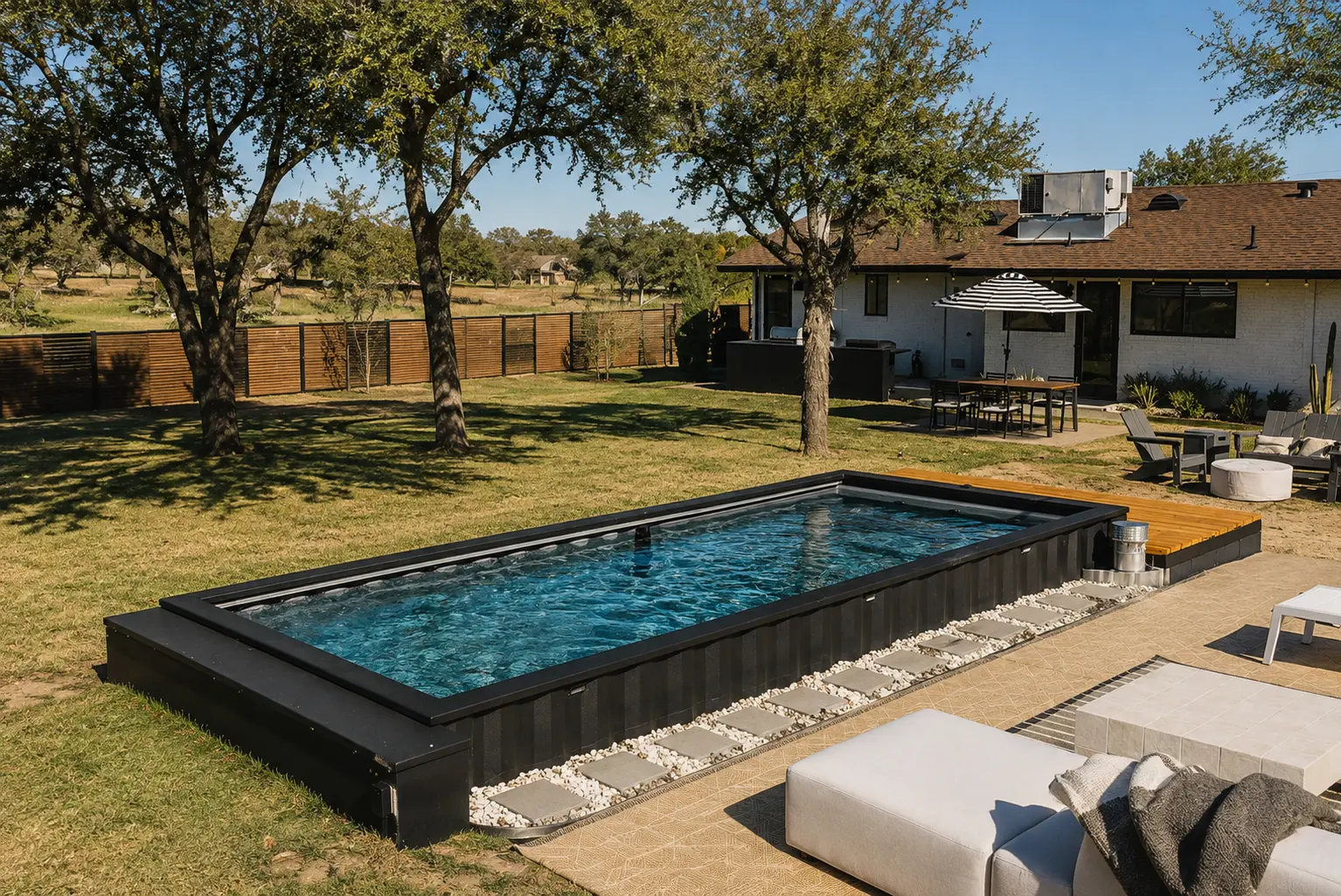
Routine
Weekly, monthly, and seasonal tasks
Weekly (15–20 minutes)
- Test and adjust chlorine or salt levels
- Check pH and alkalinity
- Skim debris and brush waterline
- Empty skimmer and pump baskets
Monthly (30–45 minutes)
- Backwash or clean the filter
- Inspect the steel shell exterior for scratches or chips
- Check the coating or liner around the swim jets and steps
- Wipe down and inspect the glass viewing window
Seasonal (2–3 hours)
- Spring: full system startup, shock treatment, equipment check
- Summer: monitor evaporation and top off frequently
- Fall: reduce run time, clean thoroughly before cooler weather
- Winter: freeze protection for plumbing, heater, and jets
Water chemistry: chlorine or saltwater systems
Container pools work well with either a traditional chlorine system or a saltwater chlorinator. Saltwater systems are increasingly popular in Texas because they produce chlorine at a low, steady level, which is gentler on skin and swimwear and reduces the "chemical" smell.
- Free chlorine: 1–3 ppm (traditional) or maintained automatically with a salt cell
- pH: 7.4–7.6
- Total alkalinity: 80–120 ppm
- Salt level (if applicable): typically 2,700–3,400 ppm depending on the cell
Test water at least weekly in summer, and more often during heavy use or after storms, since Texas rain and dust can quickly shift chemistry.
Filtration and pump care
Because a container pool has a smaller water volume than many traditional pools, the filtration system works efficiently but still needs regular attention. Clean or backwash the filter monthly, inspect pump seals and O-rings twice a year, and listen for unusual pump noise, which often signals debris in the impeller or a failing bearing.
Steel shell and exterior coating care / rust prevention
The steel shell is protected inside and out by industrial-grade coatings. Rust becomes a risk only when that protection is compromised, so:
- Inspect the exterior finish twice a year for chips, scratches, or fading
- Touch up any exposed metal immediately with a matching marine-grade coating
- Keep drainage clear around the base so water doesn't pool against the shell
- Rinse off dirt, pollen, and salt buildup from the exterior periodically
Liner or ceramic-coating inspection
Depending on your build, the interior may be finished with a ceramic coating, epoxy, or a vinyl liner. Check for cracking, bubbling, or discoloration around steps, jets, and the waterline monthly. Small imperfections are easy and inexpensive to repair if caught early, but neglected damage can expose the steel underneath.
Texas summer heat and evaporation
Texas summers push evaporation rates higher than most of the country. Expect to top off water more frequently—sometimes an inch or more per week during peak heat and wind. A pool cover reduces evaporation significantly and also cuts down on chemical use and heating costs.
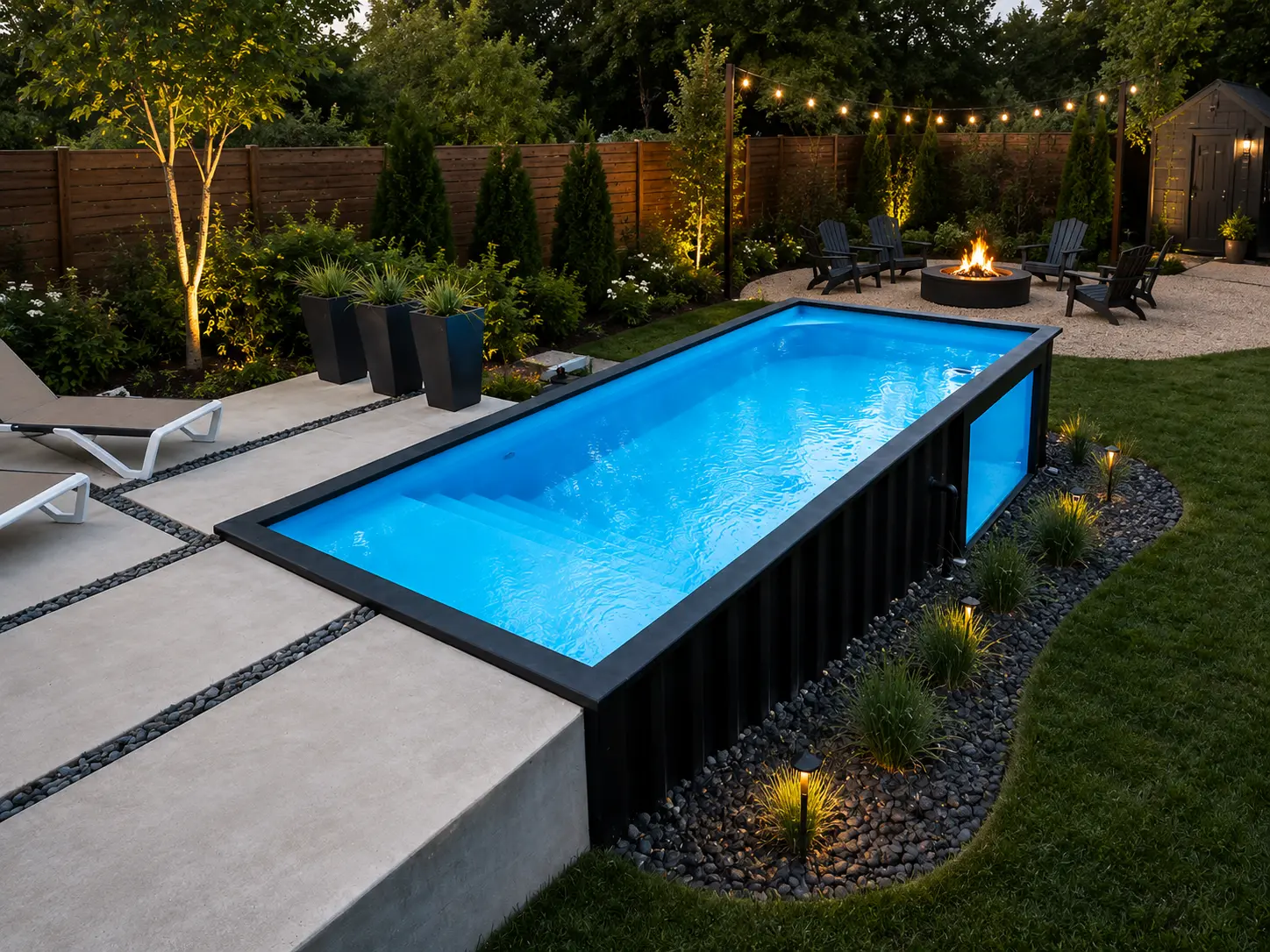
Winter
Winterizing in a Texas freeze
Before a hard freeze
- Keep the pump running during freezing temperatures to prevent ice blockages
- Insulate or heat-trace exposed above-ground plumbing
- Drain and protect swim jet lines if the system will sit idle
- Check that the heater's freeze-protection mode is enabled
During cold snaps
- Never fully shut off circulation in freezing weather
- Keep the water level above skimmer lines
- Inspect equipment after the freeze passes
Heater and swim-jet care
If your container pool includes a heater or swim-jet resistance system for lap swimming, have both professionally serviced once a year. Clean intake screens on the heater regularly, and check swim-jet motors for unusual noise or reduced flow, which often points to a clogged intake or worn impeller.
LED lights
LED pool lights are low-maintenance but should be checked for a tight, water-sealed fitting each season. If a light flickers or dims, have it inspected promptly—moisture intrusion is the most common cause and is easiest to fix early.
Cleaning the glass window
Many container pools include a glass viewing window, which needs gentle care. Use a non-abrasive pool-safe glass cleaner and a soft cloth or squeegee—avoid abrasive pads that can scratch the acrylic or glass surface over time.
Annual professional service
Schedule a professional inspection once a year to check the coating, welds, plumbing connections, electrical components, and equipment pad. This typically costs $200–$400 and catches small issues before they become expensive repairs.
Expected operating costs
- Chemicals: $400–$700 per year
- Electricity (pump, filtration, heater use): $500–$1,200 per year
- Routine service/cleaning (if outsourced): $100–$200 per month
- Annual professional inspection: $200–$400
- Coating touch-ups: $100–$300 as needed
Total annual cost: roughly $1,200–$2,500, comparable to or slightly less than a similarly sized traditional in-ground pool.
FAQ
Common maintenance questions
Do container pools need more maintenance than traditional pools?
No. Once the water chemistry and filtration are dialed in, a container pool is maintained almost exactly like a traditional in-ground pool—plus a few extra checks on the steel shell and coating.
Will the steel shell rust?
Not if the interior coating (ceramic, epoxy, or liner) stays intact and the exterior finish is inspected annually. Rust only becomes a risk when a coating is scratched or chipped and left unaddressed.
Can I use a saltwater system in a container pool?
Yes. Saltwater chlorination works well in container pools and is popular in Texas because it reduces the harsh chemical smell and skin irritation from traditional chlorine.
Do I need to winterize in Texas?
Most of Texas doesn't require full winterization, but you should protect exposed plumbing, the heater, and swim jets during hard freezes, which occur most winters.
How much does annual upkeep cost?
Expect roughly $1,200–$2,500 per year for chemicals, electricity, and routine service, plus an annual professional inspection.
Questions about maintaining your container pool?
We build every pool with durable coatings and steel protection, and we're here for annual inspections, seasonal service, and troubleshooting.
Text (817) 372-8105 — we usually reply the same day.