Founder guide
What's included in a container pool base configuration (and what isn't)
By Tanson Bothe, founder · November 17, 2026
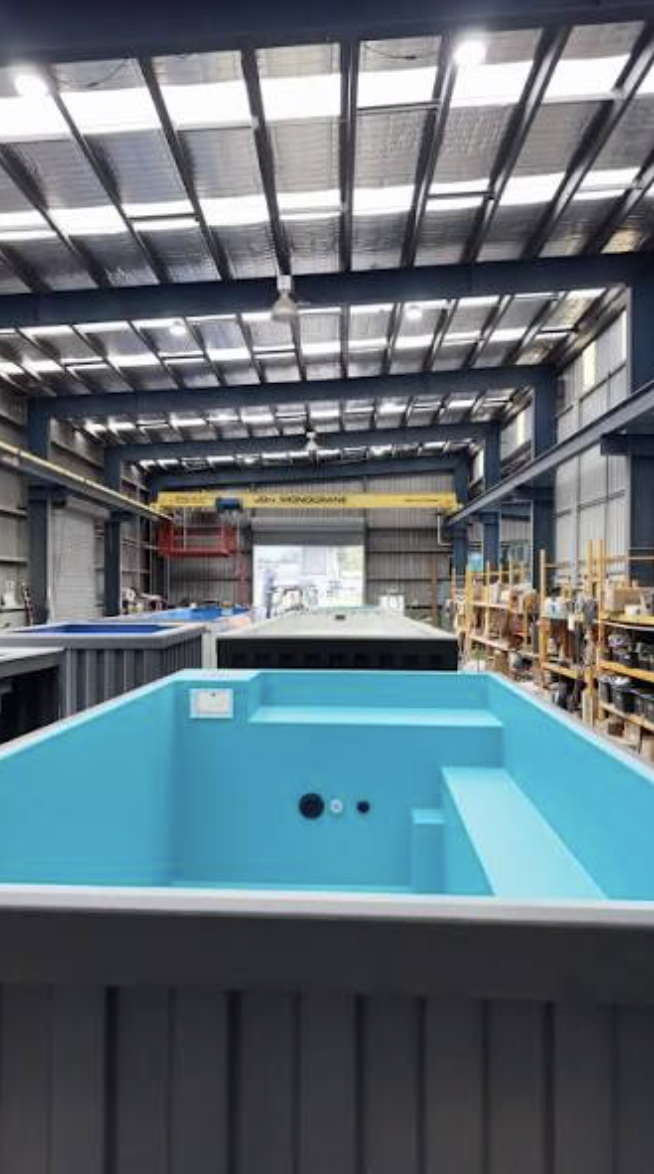
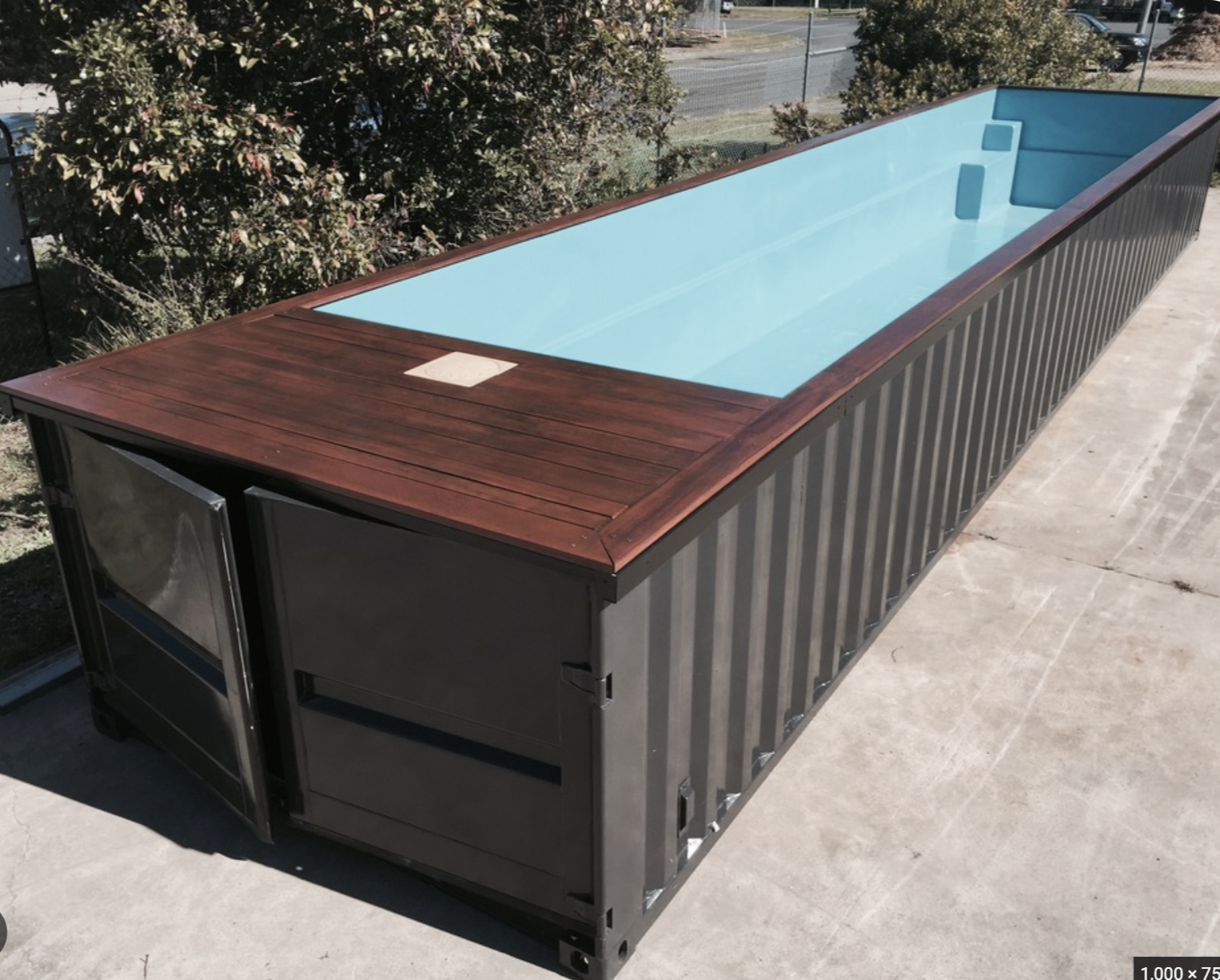
Every one of our container pools starts from the same base configuration: a shop-built steel shell with a seamless polyurea interior, swim jets, one underwater LED light, a hook-on ladder, a 4'6" water depth, and the pump and filter hidden at one end behind an in-pool bench. A heater, a spa, tile, steps and decking are add-ons. Delivery, the crane, the pad, the electrical run and permits are quoted to your property, because they depend on your yard, not on the pool.
That's the short answer. Here's the line-by-line version, so you can compare us to anyone else apples to apples.
Why "what's included" matters more than the headline number
Container pool quotes are hard to compare because nobody includes the same things. One company's "pool" is a coated box with a filter. Another's includes jets, lights, a bench and a water test. Neither number tells you what you'll actually spend to swim.
That's why we stopped publishing pool-only prices. What matters is the all-in project. For reference, a basic 8x20 on a flat lot comes to about $80,000 all-in. Sloped lots, raised pools on piers with elevated decking, or in-ground builds can reach about $200,000. Every project is custom-quoted. Our container pool cost guide walks through every line.
The shell: how the base build is made
This is the part you never see once the pool is set, and it's the part that decides how long the pool lasts.
- A new one-trip shipping container, cut to height. One-trip means it made a single voyage. We don't start from a beat-up used box.
- 5-foot walls with a standard 4'6" water depth. Deeper builds are available, up to 9 feet.
- A 3/16" steel plate floor on a welded steel tube frame, so the bottom is stiffened for the weight of water, not just cargo.
- A steel tube cap around the top edge that stiffens the walls and gives a clean, finished line.
- A deck-board cap around the top so the rim is comfortable to sit on and lean against.
- Charcoal painted steel exterior. The outside gets its own coating so sun, rain and sprinklers don't reach bare steel.
For a sense of scale, an 8x20 at standard depth holds about 4,130 gallons.
The interior: seamless polyurea
The inside is sprayed with polyurea, one continuous waterproof skin with no seams, grout lines or liner edges. It goes on indoors, in our fabrication partner's shop in Georgetown, Texas, where the steel can be prepped and kept dry. That matters, because a coating is only as good as its bond.
Interior colors are clear, neutral, tan, grey, black and royal blue. Tile and stone finishes are upgrades. If you want the full story on why the coating is the whole ballgame, read do container pools rust?
Swimming features that come standard
- Swim jets. Standard on every build. They let you swim in place in a short pool and make a long one feel like a lap lane.
- One underwater LED light, with its transformer and controls.
- Hook-on ladder. Simple, and it can be lifted out. That matters for safety, which I cover below.
- A 2-foot baja ledge at the equipment end. It's a shallow shelf for sitting, lounging or letting kids stand.
- A built-in in-pool bench that doubles as the wall in front of the equipment bay.
Equipment: hidden at one end, reachable from outside
On above-ground builds, the pump, filter, electrical and lighting controls live in an equipment bay at one end of the pool. In front of it, inside the pool, is the bench. On the outside are container-style service doors, so you or a tech can reach everything without getting wet. On top is about 2 feet of deck.
What's in the bay:
- Variable-speed pump. It can run slow most of the day and fast when it needs to. ENERGY STAR says certified pool pumps use less energy than standard ones and often pay for themselves in under two years.
- Cartridge filtration. No backwashing, so you're not dumping treated water every week. Pool Research notes a typical cartridge may only need cleaning once or twice a season, and is easier to service than a sand filter.
- Skimmer, return jets and suction outlets, PVC plumbing and valves.
- Electrical controls and protection.
On in-ground builds, the equipment moves to its own pad outside the pool.
Design help and a water test
Two things in the base build aren't hardware.
First, design help and a site plan. Every project starts with a design consult on a video call with me, Justin Hill (fabrication) and Juan Valles (installation). We look at your photos, your lot and how you want to use the pool before anyone cuts steel. Our process page lays out every step.
Second, every pool is filled and water-tested before it ships. That proves the shell and plumbing hold water before the pool ever leaves the shop.
Add-ons: what costs extra
These are the most common upgrades. None of them are required, and all of them get priced in your quote.
- Heater. The base build doesn't include one. Whether you need it depends on how early and late in the year you want to swim. The U.S. Department of Energy notes heat pump pool heaters work efficiently as long as outside air stays above about 45–50°F, and its cost tables show a cover cuts heating costs dramatically.
- Spa. A spa can be built inside the main container with a divider. Pair it with a heater.
- Saltwater system. It can work, but salt is hard on steel, so we talk it through on the design call.
- Tile or stone interior finish.
- Entry steps instead of the hook-on ladder.
- Glass viewing window.
- Deck package.
- Automatic cover.
- Insulation.
- Custom depth, up to 9 feet.
What's quoted per property (not part of the pool)
These six items aren't in the base build because they change with every yard:
- Delivery from the fabrication shop.
- Crane set. Crane size depends on reach, access and power lines.
- Pad and site preparation. A flat lot and a hillside are different jobs.
- Electrical run from your panel to the equipment.
- Decking and hardscape beyond the 2-foot equipment deck.
- Permits.
When you compare quotes from anyone, ask which of these six are in the number. If a price looks low, it's usually because most of them aren't.
Above-ground, partially recessed or in-ground
The base build works all three ways. Above-ground is the simplest and keeps the equipment in the bay. Partially recessed sets it lower into the yard. In-ground costs more because of excavation and moves the equipment to a separate pad. Above-ground pools can also be lifted out by crane and moved later, which in-ground pools can't easily do.
On safety: an above-ground pool wall can sometimes serve as the required barrier when it's at least 48 inches tall and the ladder can be removed or locked. The IRC above-ground pool rules spell this out, but your city's code is what counts. A deck that reaches the rim usually means a separate fence.
Where a container pool is NOT the right fit
If you want curves, a freeform shape or a beach entry, a container pool isn't it. It's a rectangle, 8 or 16 feet wide. If you want one fixed price with no site work to quote, no pool type offers that, and a container pool is no exception because so much depends on your yard. And if you want a heated pool for the cheapest possible number, plan for the heater add-on from the start or look at other options too.
Which size to start with
Most people start by looking at two models. The 8x20 fits tight yards and side lots and works as a plunge and lounge pool. The 8x40 gives you a real lap lane in an 8-foot-wide footprint. Both use the exact base configuration above. The larger 8x60, 16x20, 16x40 and 16x60 are built on the same system, with equipment sized to the volume.
The bottom line
The base build covers the pool itself: shell, interior, jets, light, ladder, bench, baja ledge, equipment and a water test. Heat, spa, finishes and steps are your choices. Site work is your yard's choice. Get all three in writing, and you'll know exactly what you're buying.
Send me three photos of your yard and I'll tell you what fits: Get an estimate →
FAQ
Do container pools come with a heater?
No. Swim jets and one underwater LED light are standard in the base build. A heater is an add-on.
Is the pump and filter included?
Yes. A variable-speed pump, cartridge filter and controls come in every base build, hidden at one end behind an in-pool bench with outside access doors. On in-ground builds the equipment sits on its own pad outside the pool.
What's not included in the price of the pool?
Delivery from the shop, the crane set, pad and site preparation, the electrical run to the equipment, decking and hardscape, and permits. Those are quoted to your property.
How deep is a standard container pool?
4 feet 6 inches of water in a 5-foot container. Custom depth is available up to 9 feet.
Can I add a spa to a container pool?
Yes. A spa can be built inside the main container with a divider. Most people pair it with the heater add-on.
What interior colors are available?
Clear, neutral, tan, grey, black and royal blue polyurea. Tile and stone finishes are upgrades.
Sources
- ENERGY STAR certified pool pumps use less energy and often pay back in under two years: ENERGY STAR: Pool Pumps
- Cartridge filters: no backwashing, cleaned once or twice a season, easier to service: Pool Research: Pool Cartridge Filters 101
- Heat pump pool heaters work efficiently above about 45–50°F; covers cut heating costs: U.S. Department of Energy: Heat Pump Swimming Pool Heaters
- Above-ground pool wall as barrier, removable or lockable ladder (IRC AG106): Jaspector: IRC 2024 above-ground pool barriers
READY TO GET STARTED?
Send your project details. A real person replies within one business day.
Designs, pricing and timelines are preliminary until a written agreement.